


MARILIA FOTOPOULOU
Opening: 02/04/2026 Duration: 02/04-09/05/2026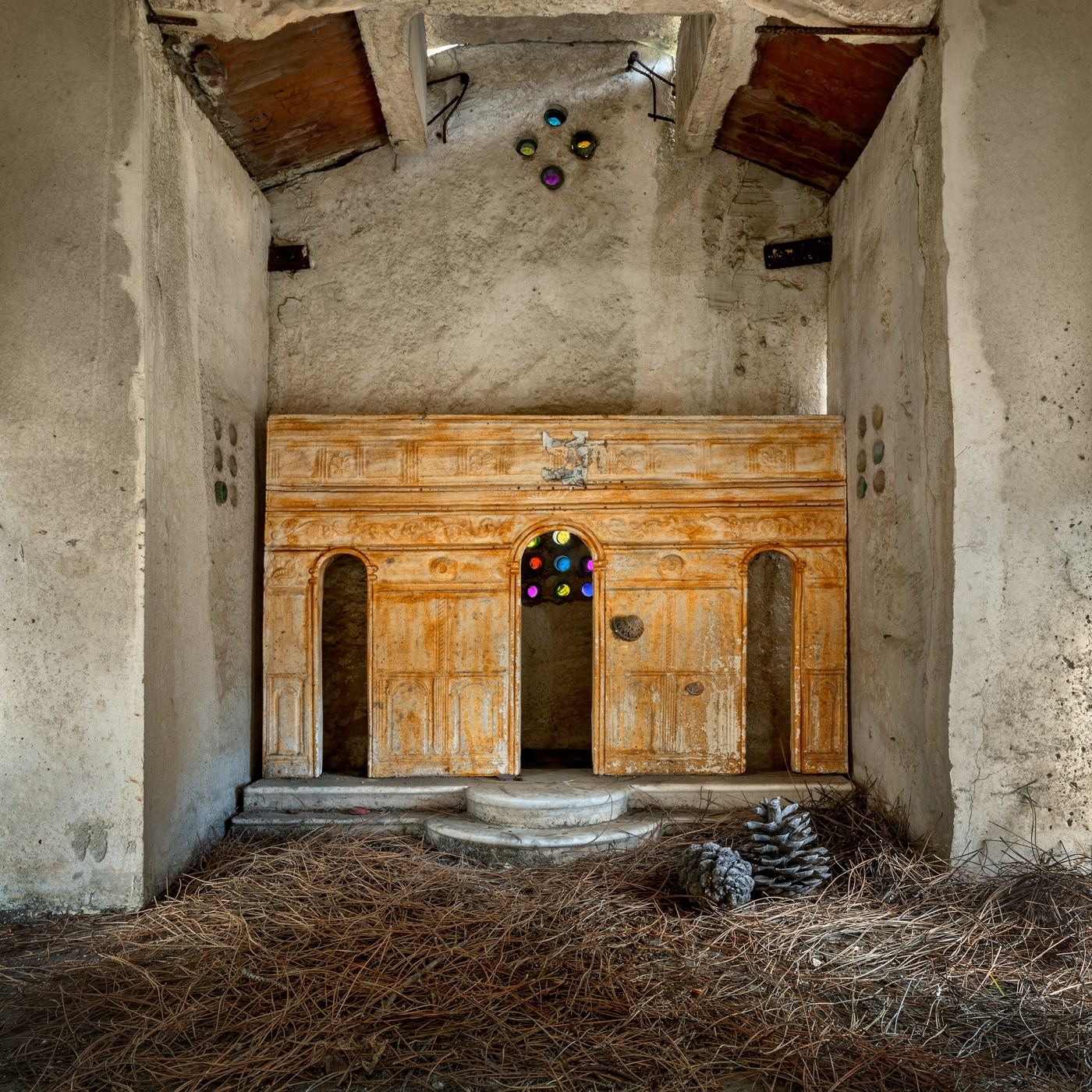
MARILIA FOTOPOULOU
ICONOSTASES
02.04.2026 – 09.05.2026
On Thursday, April 2nd, from 19:00 to 21:00,IleanaTounta Contemporary Art Centerpresents Marilia Fotopoulou’s solo show.
The exhibition will run until May 09th 2026.
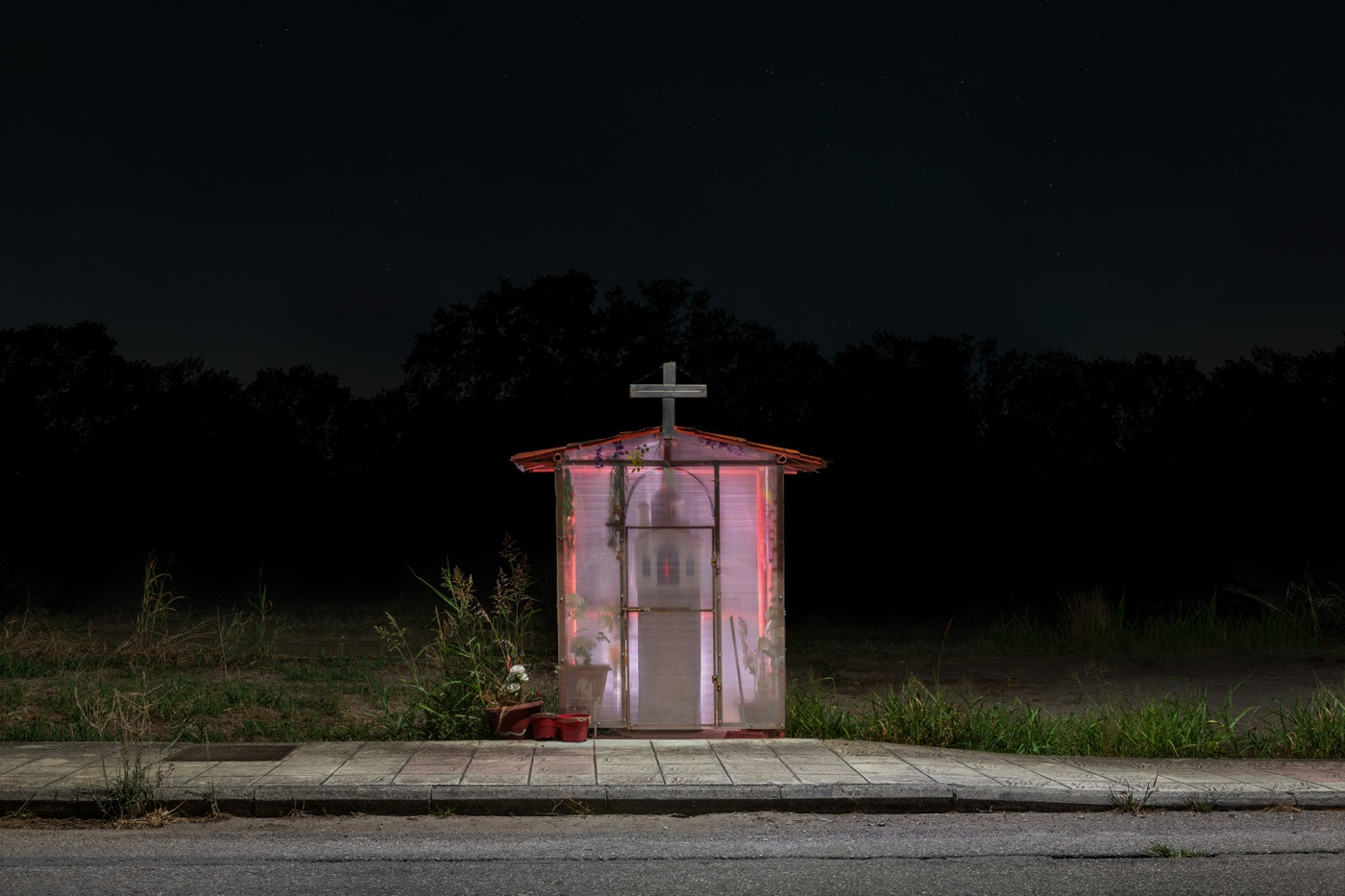
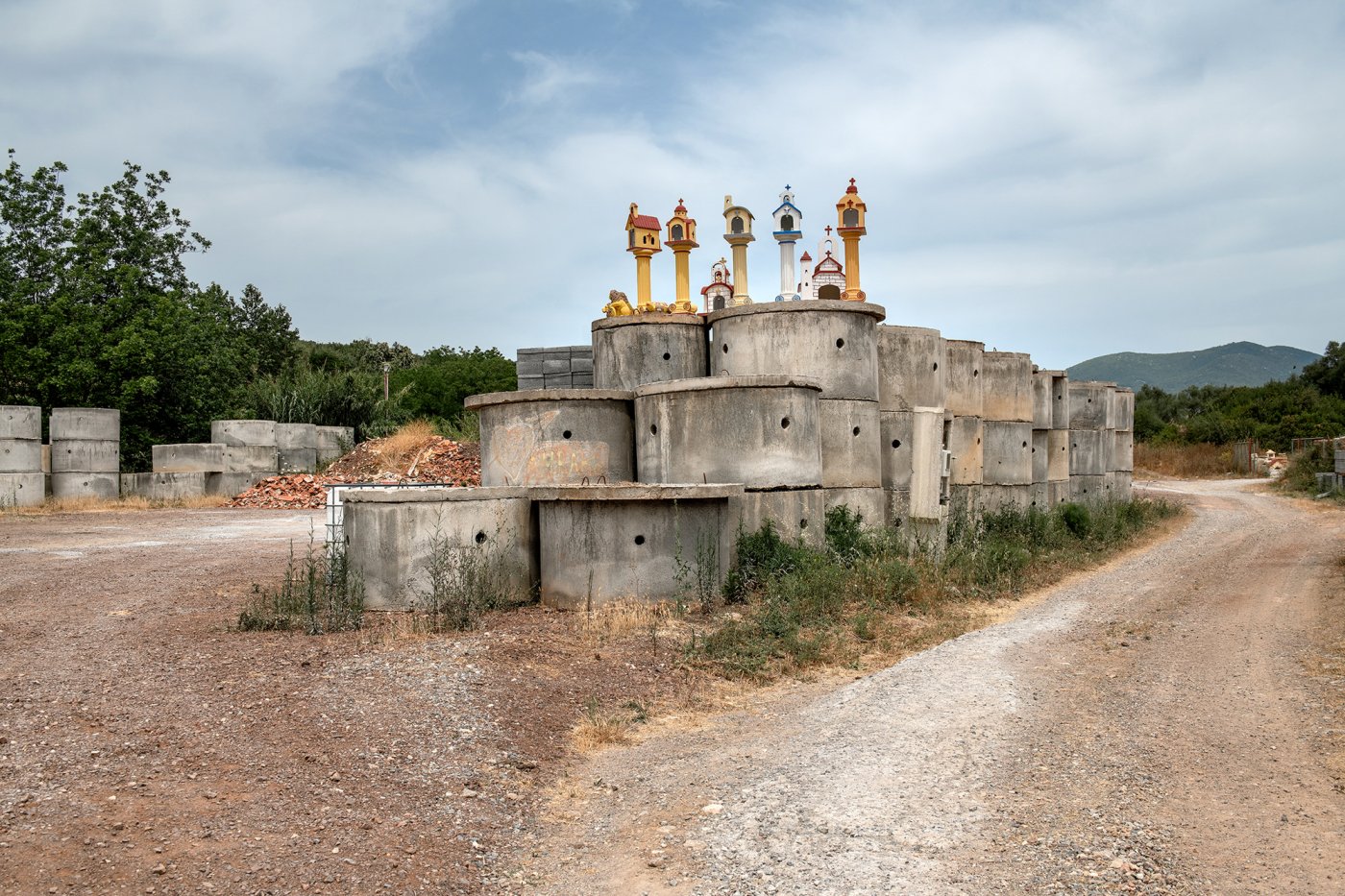
At the site of loss, where a life was violently cut short, the roadside shrine remains as a material trace of memory inscribed in public space. Scattered along national roads, rural passages, and urban peripheries, these shrines render private trauma visible within the collective sphere. Fotopoulou’s photographic project approaches roadside shrines as transitional sites of memory, where faith, mourning, and decay are interwoven with the Greek landscape.
In the first section, the shrines are approached through their exterior form and their relationship to the surrounding environment. The images open a window onto the landscape, revealing the way in which they are embedded within it, while simultaneously marking it, transforming it into a site of memory. Their presence—at times discreet, at times intensely charged—signals a personal rupture within shared space, while also reflecting the sensibility of the people and the culture that brought them into being.
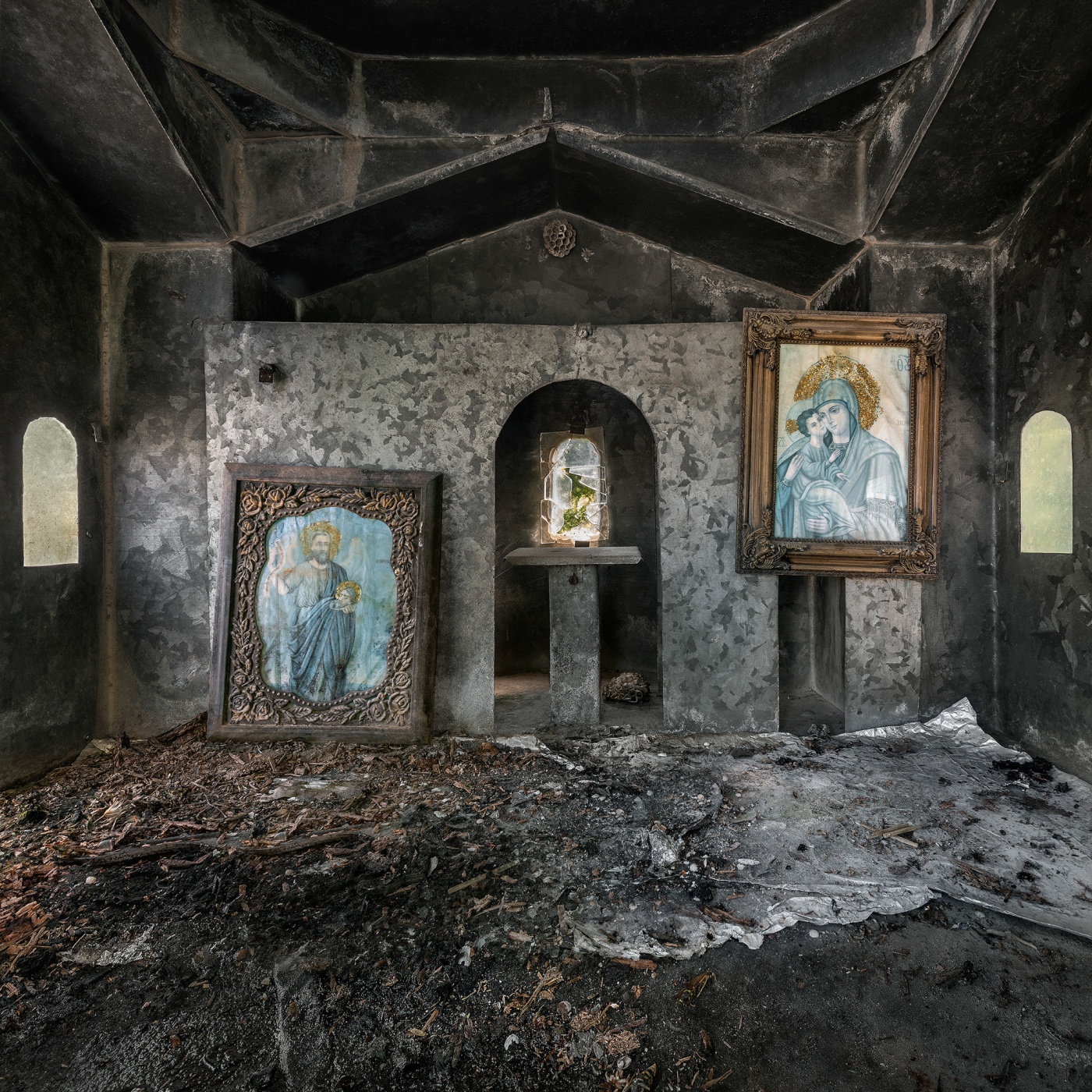
In the second section, the gaze shifts toward their interior. The viewer enters the dark shell of the structure, revealing something elusive within a mysterious space, where the passage of time condenses, while memory alternately persists and fades. In some cases, only fragments remain: an icon, a vigil lamp, a photograph, or simply the remnants of human care. The original religious symbolism has receded and the corroded interiors of the shrines, having lost their original functional significance, shift from devotional use into a field of silence and decomposition, exuding an uncanny aura. Decay reconstitutes a new image in which abandonment emerges as a dominant trace of memory. Everything deteriorates, just as memory itself deteriorates.
The way in which the artist negotiates the photographic distance and proximity, the use of scale in the composition of the interior images and the presence of elements that evoke ecclesiastical architecture, activate a symbolic signification of space. Rather than being treated as mere remnants of ritual practice, the shrines emerge as forms at the threshold of life and death, the visible and the invisible, memory and oblivion, and personal and collective experience. Fotopoulou’s works do not remain at the level of documentation, but approach the material, sensory, and semantic intensity of these structures, where absence takes form and the trace remains active.
Date
April 02, 2026